
Dr. Greg Dusek
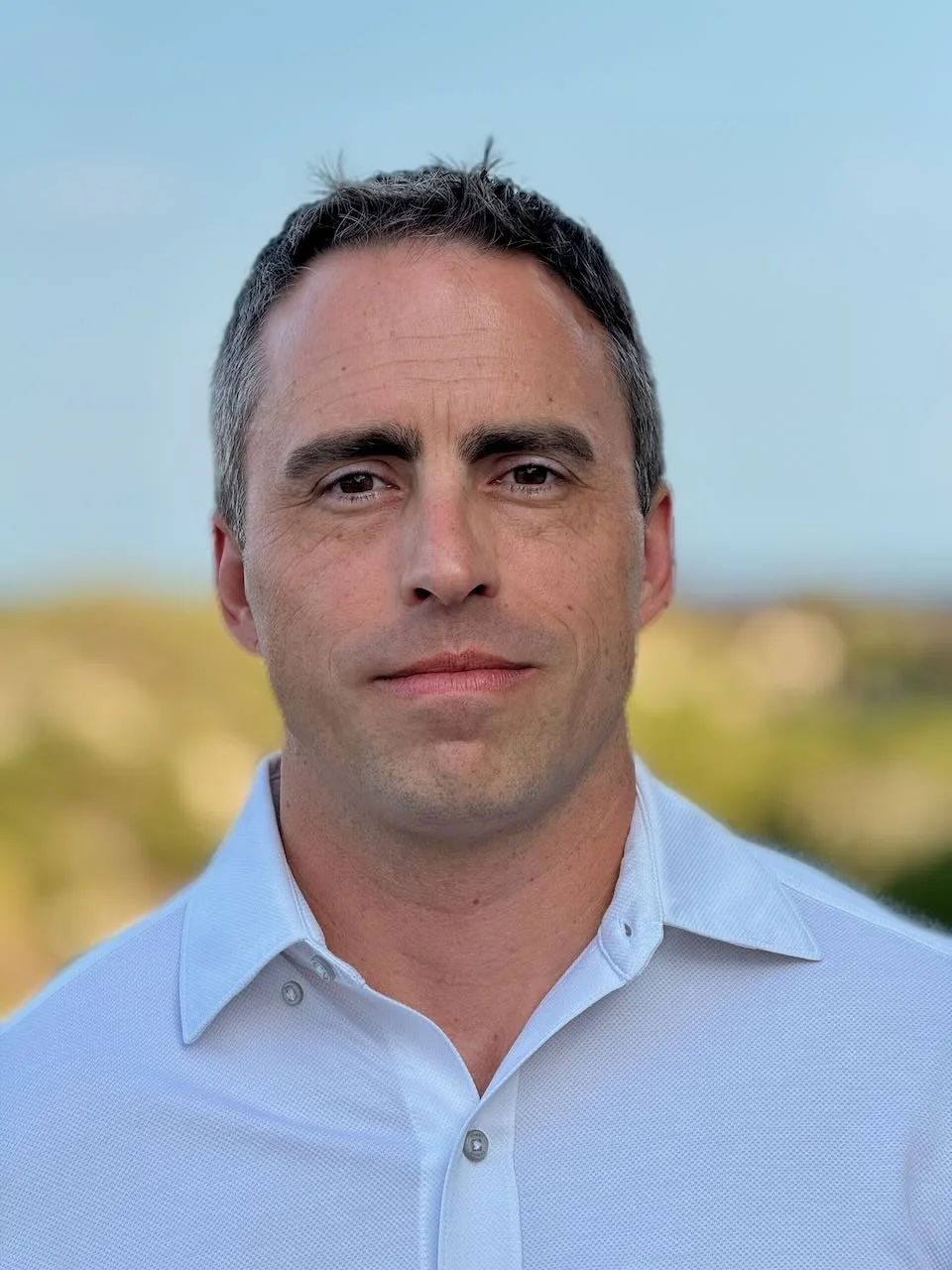
Dr. Greg Dusek is an accomplished coastal scientist and expert in oceanographic modeling, coastal hazards, and the strategic application of artificial intelligence for environmental solutions. As Chief Scientist for NOAA's Center for Operational Oceanographic Products and Services from 2015-2025, Dr. Dusek pioneered key initiatives including the nation's first operational rip current forecast model, NOAA's monthly high tide flooding outlook, and the groundbreaking NOAA Coastal Ocean Reanalysis. His extensive portfolio includes serving as NOS modeling lead, as the Chair of the NOAA Artificial Intelligence Executive Committee, and leading cross-agency collaborations that have significantly enhanced coastal resilience and coastal hazard predictive capabilities. His outstanding contributions have been recognized with several NOAA Bronze Medal awards and the NOAA National Ocean Service Employee of the Year award.
Dr. Dusek's influence extends beyond NOAA. He is an adjunct Associate Professor at North Carolina State University, and as he presently serves as the Chair of the American Meteorological Society Coastal Environment Committee where he facilitates dialogue among scientists, stakeholders, and policymakers to advance coastal research and its applications. He also previously served as the Co-Executive Director of the U.S. Coastal Research Program, and the Technical Co-Chair for the Interagency Sea Level Rise Task Force, where he co-authored the authoritative 2022 Sea Level Rise Scenarios Report and the helped develop the US Global Change Research Program Sea Level Change site. His extensive publication record, comprising numerous peer-reviewed articles and technical reports, underscores his commitment to advancing scientific knowledge and practical applications. A sought-after speaker, Dr. Dusek has presented at numerous national and international conferences, workshops, and webinars. Additionally, his insights on coastal hazards and environmental forecasting have been featured widely in prominent media outlets including NPR, NBC News, The Washington Post, and CBS This Morning. Dr. Dusek's comprehensive experience positions him uniquely to provide strategic scientific consulting and tailored solutions that address complex coastal and environmental challenges for a diverse range of clients.
Dr. Dusek completed his B.S. in applied mathematics in 2004, and his M.S. in Teaching and Curriculum in 2005 at the University of Rochester. He is a proud Tar Heel, completing his PhD in Physical Oceanography at the University of North Carolina at Chapel Hill in 2011. Dr. Dusek presently resides in Maryland with his wife Katie and their four kids.
Publications
Chen, B., J. Gajbhar, G. Dusek, R. Redmon, P. Hogan, P. Liu, D. Bohnenstiehl, D. Xue and R. He (In review). OceanAI: A conversational platform for accurate, transparent, near-real-time oceanographic insights. arXiv.https://doi.org/10.48550/arXiv.2511.01019
Dusek, G., J. A. Straub, J.A. Brown, N. Elko, H.F. Stockdon, K.L. Brodie, A.K. Hannides, T.L. Mandel, M.L. Palmsten, J.A. Puleo, P. Ruggiero, K.A. Serafin, A.R. Siders, A.S. Tritenger, and M.E. Wengrove (2026). The Future of coastal processes research, Part 2: State of the science. Shore & Beach. 94(2), Spring 2026, 35-57. Available at: https://asbpa.org/wp-content/uploads/2026/07/Spring2026_94_2_web-1.pdf
Stockdon, H.F., J. A. Straub, J.A. Brown, N. Elko, G. Dusek, K.L. Brodie, A.K. Hannides, T.L. Mandel, M.L. Palmsten, J.A. Puleo, P. Ruggiero, K.A. Serafin, A.R. Siders, A.S. Tritenger, and M.E. Wengrove (2026). The Future of coastal processes research, Part 1: A community-driven vision for the next decade of coastal science. Shore & Beach. 94(2), Spring 2026, 7-34. Available at: https://asbpa.org/wp-content/uploads/2026/07/Spring2026_94_2_web-1.pdf
Choi, J., G. Dusek (2026). Machine learning and pre-simulation models for rip current prediction at Duck, NC: comparison and integration. Coastal Engineering. https://doi.org/10.1016/j.coastaleng.2026.105037
Conlin M.P., G. Dusek, J. Ratcliff, J.A. Callahan, K.E. Kavanaugh, et al. (2026) Filling the gaps between tide gauges: Demonstrating high-resolution seasonal high tide flooding predictions using NOAA’s Coastal Ocean Reanalysis. PLOS ONE 21(3): e0344695. https://doi.org/10.1371/journal.pone.0344695
Hovenga PA, M. Newman, J.R. Albers, W. Sweet, G. Dusek, T. Xu, J.A. Callahan, S-I Shin, and G.P. Compo (2025) Using stochastically generated skewed distributions to represent hourly nontidal residual water levels at United States tide gauges. Front. Mar. Sci. 12:1618367. https://doi.org/10.3389/fmars.2025.1618367
Feng, X., M.J. Widlansky, T. Lee, O. Wang, M.A. Balmaseda, H. Zuo, G.Dusek, W. Sweet, and M.F. Stuecker. (2025). Indications of improved seasonal sea level forecasts for the United States Gulf and East Coasts using ocean-dynamic persistence, EGUsphere, https://doi.org/10.5194/egusphere-2025-98, 2025.
Long, X., M. Newman, S.-I. Shin, M. Balmaseda, J. Callahan, G. Dusek, L. Jia, B. P. Kirtman, and J. P. Krasting. (2025). Evaluating current statistical and dynamical forecasting techniques for seasonal coastal sea level prediction. Journal of Climate, 38(6), 1477–1503. https://doi.org/10.1175/JCLI-D-24-0214.1
Khan, F. H., A. De Silva, A. Palinkas, G. Dusek, J. Davis, and A. Pang. (2025). RipFinder: Real-time rip current detection on mobile devices. Frontiers in Marine Science. https://doi.org/10.3389/fmars.2025.1549513
Keeney, A., G. Dusek, J. Callahan, J. Ratcliff, T. Jima, W. Brooks, D. Marcy, B. Blanton, J. Tilson, T. G. Asher, R.A. Luettich, M.J. Widlansky, L. Rose, C. Morse, J. Haddad and B. Waring (2025). NOAA’s Coastal Ocean Reanalysis: Gulf of Mexico, Atlantic, and Caribbean. NOAA Technical Report NOS CO-OPS 108. https://doi.org/10.25923/5ypp-4e84
Fiorentino, L., G. Dusek, & S. Pe'eri (2025). Estimating total vertical uncertainty of short term and partner water level observations. NOAA Technical Report NOS CO-OPS 112. https://doi.org/10.25923/s9h7-vy98
Zervas, C., D. Wolcott, J.A. Callahan, B. Armos & G. Dusek (2025) Linear split trends of relative mean sea level at CO-OPS tide gauges. NOAA Technical Memorandum NOS CO-OPS 115. https://doi.org/10.25923/s84e-6w11
Hernandez, D., J. Dorton, C. Alsbrooks, R. Clark, K. Morano, T. Troxler, B. T. Glazer, L. Fiorentino, N. Rome, C. Wilson, and G. Dusek. (2025). Building resilience in vulnerable coastal communities with the Southeast Water Level Network initiative. Marine Technology Society Journal, 59(1), 80–85. https://doi.org/10.4031/MTSJ.59.1.1
Dusek, G., R. Loesch, P. Stone, L. Heilman and L. Fiorentino (2024). National Water Level Observation Network (NWLON) Requirements. NOAA Technical Report NOS CO-OPS 07.https://doi.org/10.25923/h9h9-6p20
Kahn, F.H., A. de Silva, G. Dusek, J. Davis and A. Pang (2024). SmartCS: Enabling the Creation of ML-Powered Computer Vision Mobile Apps for Citizen Science Applications without Coding. Citizen Science: Theory and Practice.https://doi.org/10.5334/cstp.642
Rose, L., M. J. Widlansky, X. Feng, P. Thompson, T. G. Asher, G. Dusek, B. Blanton, R. A. Luettich, Jr., J. Callahan, W. Brooks, A. Keeney, J. Haddad, W. Sweet, A. Genz, P. Hovenga, J. Marra, and J. Tilson. (2024). Assessment of water levels from 43 years of NOAA's Coastal Ocean Reanalysis (CORA) for the Gulf of Mexico and East Coasts. Frontiers in Marine Science. https://doi.org/10.3389/fmars.2024.1381228
Lee, C.C., S.C. Sheridan, D. Pirhalla, V. Ransibrahmankul and G. Dusek (2024). A novel applied climate classification method for assessing atmospheric influence on anomalous coastal water levels. International Journal of Climatology. https://doi.org/10.1002/joc.8464
Casper, A., E.S. Nuss, C.M. Baker, M. Moulton, G. Dusek (2024). Assessing NOAA Rip-Current Hazard Likelihood Predictions: Comparison with Lifeguard Observations and Parameterizations of Bathymetric and Transient Rip-Current Types. Weather and Forecasting.https://doi.org/10.1175/WAF-D-23-0181.1
Feng, X., M.J. Widlansky, M.A. Balmaseda, H. Zuo, C.M. Spillman, G. Smith, X. Long, P. Thompson, A. Kumar, G. Dusek and W. Sweet (2024). Improved capabilities of global ocean reanalyses for analysing sea level variability near the Atlantic and Gulf of Mexico Coastal U.S. Frontiers in Marine Science. https://doi.org/10.3389/fmars.2024.1338626
Bernhardt, J., K. Fallon and G. Dusek (2024). Conoce Tus Opciones: The Challenges of Communicating Rip Current Information in Spanish. Weather, Climate and Society. https://doi.org/10.1175/WCAS-D-24-0035.1
McLaughlin, L.R., G. Dusek, T. Jima, A. Haynes and C. Guerin (2024). National Water Level Observation Network (NWLON) Prioritization. NOAA Technical Report NOS CO-OPS 104.https://doi.org/10.25923/84jn-wd58
Lee, C. C., S.C. Sheridan, G. Dusek and D. Pirhalla (2023). Atmospheric Pattern–Based Predictions of S2S Sea Level Anomalies for Two Selected U.S. Locations. Artificial Intelligence for the Earth Systems.https://doi.org/10.1175/AIES-D-22-0057.1
Koon, W., R.W. Brander, G. Dusek, B. Castelle and J.C. Lawes (2023). Relationships between the tide and fatal drowning at surf beaches in New South Wales, Australia: Implications for coastal safety management and practice. Ocean and Coastal Management.https://doi.org/10.1016/j.ocecoaman.2023.106584
de Silva, A., M. Zhao, D. Stewart, F. Kahn, G. Dusek, J. Davis and A. Pang. (2023). RipViz: Finding Rip Currents by Learning Pathline Behavior. IEEE Transactions on Visualization and Computer Graphics. https://doi.org/10.1109/TVCG.2023.3243834
Dusek, G., W. Sweet, M. Widlansky, P. Thompson and J. Marra (2022). A novel statistical approach to predict seasonal high tide flooding. Frontiers in Marine Science.https://doi.org/10.3389/fmars.2022.1073792
Mori, I., A. de Silva, G. Dusek, J. Davis and A. Pang. (2022). Flow-based Rip Current Detection and Visualization. IEEE Access.https://doi.org/10.1109/ACCESS.2022.3140340
Kirk, K., G. Dusek, P. Tissot and W. Sweet (2022). An Approach to Approximate Wave Height from Acoustic Tide Gauges. Journal of Atmospheric and Oceanic Technology.https://doi.org/10.1175/JTECH-D-20-0212.1
Sweet, W.V., B.D. Hamlington, R.E. Kopp, C.P. Weaver, P.L. Barnard, D. Bekaert, W. Brooks, M. Craghan, G. Dusek, T. Frederikse, G. Garner, A.S. Genz, J.P. Krasting, E. Larour, D. Marcy, J.J. Marra, J. Obeysekera, M. Osler, M. Pendleton, D. Roman, L. Schmied, W. Veatch, K.D. White, and C. Zuzak, (2022). Global and Regional Sea Level Rise Scenarios for the United States: Updated Mean Projections and Extreme Water Level Probabilities Along U.S. Coastlines. NOAA Technical Report NOS 01. Available at: https://oceanservice.noaa.gov/hazards/sealevelrise/noaa-nos-techrpt01-global-regional-SLR-scenarios-US.pdf
de Silva, A., I. Mori, G.Dusek, J. Davis, and A. Pang, (2021). Automated Rip Current Detection with Region based Convolutional Neural Networks. Coastal Engineering. https://doi.org/10.1016/j.coastaleng.2021.103859
Angove, M., L. Kozlosky, P. Chu, G. Dusek, G. Mann, E. J. Anderson. J. Gridley, D. Arcas, V. Titov, M. Eble, K. McMahon, B. Hirsch, W. Zaleski, (2021). Addressing the Meteotsunami Risk in the United States. Natural Hazards. https://doi.org/10.1007/s11069-020-04499-3
Kahn, F.H., A. de Silva, G. Dusek, J. Davis and A. Pang, (2021) Authoring Platform for Mobile Citizen Science Apps with Client-side ML. In Companion Publication of the 2021 Conference on Computer Supported Cooperative Work and Social Computing. https://doi.org/10.1145/3462204.3481743.
Fiorentino, L., K. Kirk, B. Heitsenrether, G. Dusek, A. Luscher, C. DiVeglio, C. Paternostro, C. Dean and A. Pruessner (2021). Requirements for a Nearshore Wave Observation Capability within the National Ocean Service Center for Operational Oceanographic Products and Services. CO-OPS Requirements Report.https://doi.org/10.25923/5gkj-sa79
Sweet, W., S. Simon, G. Dusek, D. Marcy, W. Brooks, M. Pendleton and J. Marra (2021). 2021 State of High Tide Flooding and Annual Outlook. NOAA High Tide Flooding Report. https://doi.org/10.25923/mx62-rx21
Kammerer, C, G. Dusek, L. Heilman, K. Kirk and C. Paternostro. (2021). Puget Sound Current Survey, 2015–2017, Including the United States’ Portions of the Greater Salish Sea. NOAA Technical Report NOS CO-OPS 093.https://doi.org/10.25923/ba7d-v223
Bernhardt, J., G. Dusek, A. Hesse, W. Santos, T. Jennings, A. Smiros and A. Montes (2020). Developing a Virtual Reality Video Game to Simulate Rip Currents. Journal of Visualized Experiments. https://doi.org/10.3791/61296
Conlin, M.P., P.N. Adams, B. Wilkinson, G. Dusek, M.L. Palmsten and J.A. Brown (2020). SurfRCaT: A tool for remote calibration of pre-existing coastal cameras to enable their use as quantitative coastal monitoring tools. SoftwareX.https://doi.org/10.1016/j.softx.2020.100584.
Sweet. W.V., G. Dusek, G. Carbin, J. Marra, D. Marcy, and S. Simon (2020). 2019 State of U.S. High Tide Flooding with a 2020 Outlook. NOAA Technical Report NOS CO-OPS 092.https://doi.org/10.25923/q56g-ba90
Dusek, G., D. Hernandez, M. Willis, T.C. Vance, J. A. Brown, J.W. Long and D.E. Porter, (2019). WebCAT: Piloting the development of a web camera coastal observing network for diverse applications. Frontiers in Marine Science. https://doi.org/10.3389/fmars.2019.00353
Dusek, G., C. DiVeglio, L. Licate, L. Heilman, K. Kirk, C. Paternostro and A. Miller (2019). A meteotsunami climatology along the U.S. East Coast. Bulletin of the American Meteorological Society. https://doi.org/10.1175/BAMS-D-18-0206.1
Sweet. W.V., G. Dusek, D. Marcy, G. Carbin and J. Marra (2019). State of U.S. High Tide Flooding with a 2019 Outlook. NOAA Technical Report NOS CO-OPS 090. https://doi.org/10.25923/rbv9-th19
Sweet, W.V., G. Dusek, J. Obeysekera and J.J. Marra (2018). Patterns and Projections of High Tide Flooding Along the U.S. Coastline Using a Common Impact Threshold. NOAA Technical Report NOS CO-OPS 086.http://doi.org/10.7289/V5/TR-NOS-COOPS-086
Sweet, W.V., D. Marcy, G. Dusek, J. J. Marra and M. Pendleton (2018). 2017 State of U.S. High Tide Flooding and a 2018 Outlook. Supplement to State of the Climate: National Overview for May 2018, published online June 2018. https://www.ncdc.noaa.gov/monitoring-content/sotc/national/2018/may/2017_State_of_US_High_Tide_Flooding.pdf
Moulton, M., G. Dusek, S. Elgar, and B. Raubenheimer (2017). Comparison of Rip Current Hazard Likelihood Forecasts with Observed Rip Current Speeds. Weather andForecasting. https://doi.org/10.1175/WAF-D-17-0076.1.
Houser, C., S. Trimble, R. Brander, C. Brewster, G. Dusek, D. Jones and J. Kuhn (2017). Public Perceptions of a Rip Current Hazard Education Program: “Break the Grip of the Rip!”. Natural Hazards and Earth System Sciences. 17, 1003-1024, https://doi.org/10.5194/nhess-17-1003-2017.
Licate, L.A., L. Huang and G. Dusek (2017). A Comparison of Datums Derived from CO-OPS Verified Data Products and Tidal Analysis Datum Calculator. NOAA Technical Report NOS CO-OPS 085. Available at: http://doi.org/10.7289/V5/TR-NOS-COOPS-085
Sweet, W.V., J.J. Marra and G. Dusek (2017). 2016 State of U.S. High Tide Flooding and a 2017 Outlook. Supplement to State of the Climate: National Overview for May 2017, published online June 2017. https://www.ncdc.noaa.gov/monitoring-content/sotc/national/2017/may/2016_StateofHighTideFlooding.pdf
Kammerer, C., P. Fanelli, G. Dusek, C. Pico and C. Paternostro (2017). Casco Bay, Maine Current Survey 2014. NOAA Technical Report NOS CO-OPS 084.http://doi.org/10.7289/V5/TR-NOS-COOPS-084
Dusek, G., J. Park and C. Paternostro (2016). Seasonal variability of tidal currents in Tampa Bay, Florida. Journal of Waterway, Port, Coastal and Ocean Engineering, https://doi.org/10.1061/(ASCE)WW.1943-5460.0000373.
Dusek, G., A. van der Westhuysen and N. P. Kurkowski (2015). Forecasting and communicating risk of rip currents, wave runup, Eos, 96, https://doi.org/10.1029/2015EO034461.
Dusek, G. and H. Seim (2013). A probabilistic rip current forecast model. Journal of Coastal Research. 29(4). 909-925.https://doi.org/10.2112/JCOASTRES-D-12-00118.1
Dusek, G. and H. Seim (2013). Rip current intensity estimates from lifeguard observations. Journal of Coastal Research. 29(3). 505-518. https://doi.org/10.2112/JCOASTRES-D-12-00117.1
Park, J and G. Dusek (2013). ENSO components of the Atlantic multidecadal oscillation and their relation to North Atlantic interannual coastal sea level anomalies. Ocean Science. 9. 535-543. https://doi.org/10.5194/os-9-535-2013
Select Recent Presentations
“From Lab to Action: Enhancing community resilience with affordable flood monitoring and hyperlocal predictions” – Association of State Flood Plain Managers 50th Annual National Conference. Milwaukee, WI. 2026.
“Rips, Rising Tides, and AI: Data-Driven Advances in Coastal Hazard Monitoring and Prediction” – North Carolina State University, Department of Marine Earth and Atmospheric Sciences, Invited Speaker. Raleigh, NC. 2026
“Enhancing Coastal Hazard Monitoring and Prediction with AI and Data-Driven Methods” – University of Delaware Center for Applied Coastal Research, Invited Speaker. Newark, DE. 2026
“The Future of Coastal Processes Research: A report from the US Coastal Research Program” – AGU Ocean Sciences Meeting. Glasgow, UK. 2026. Available at: https://agu.confex.com/agu/osm26/meetingapp.cgi/Paper/2044656
“Changing the Course of the Future: The Growing Impact of AI on Coastal Science” – AMS Annual Meeting. New Orleans, LA. 2025. Available at: https://ams.confex.com/ams/105ANNUAL/meetingapp.cgi/Paper/450349
“Coastal applications of Artificial Intelligence” – 2024 USCRP Decadal Visioning Workshop, Invited Speaker. St. Petersburg, FL. 2024.
“A new operational model for seasonal high tide flooding prediction” – AMS Annual Meeting. Baltimore, MD. 2024. Available at: https://ams.confex.com/ams/104ANNUAL/meetingapp.cgi/Paper/435474
“Expanding partnership, products and use-cases for an operational coastal web camera observation network” – AGU Ocean Sciences Meeting. New Orleans, LA. 2024. Available at: https://agu.confex.com/agu/OSM24/meetingapp.cgi/Paper/1480438
“Revolutionizing Community-Based Environmental Monitoring with an Operational Coastal Webcam Observing Network” – AMS Annual Meeting. Denver, CO. 2023. Available at: https://ams.confex.com/ams/103ANNUAL/meetingapp.cgi/Paper/418672
“Models, AI and Green Dye: How we are transforming rip current prediction, observation and communication to save lives” – University of North Carolina at Chapel Hill, EMES Department Seminar Series, Invited Speaker. Chapel Hill, NC. 2022.
“Creating Time for Creativity: Accelerating research and development innovation at an operational federal organization” – AMS Annual Meeting. Virtual. 2022. Available at: https://ams.confex.com/ams/102ANNUAL/meetingapp.cgi/Paper/394586
“Using Ensemble Predictions of Coastal Sea Level Anomalies to Improve Forecasts of High Tide Flooding” – AGU Ocean Sciences Meeting. 2022. Available at: https://osm2022.secure-platform.com/a/solicitations/3/sessiongallery/662
“Know Before Your Go: Rip Current Forecasting at NOAA” – ASBPA 2021 National Coastal Conference, Invited Speaker. New Orleans, LA and Virtual. 2021.
“Applying technology to improve our ability to forecast, observe and detect rip currents” – SECOORA Webinar Series, Invited Speaker. Webinar. 2021. Available at: https://secoora.org/webinar-series/
“Advancing AI at NOAA: The NOAA AI Strategy and Implementation Plan” – NOAA Coastal Coupling Community of Practice, Invited Speaker. Webinar. 2020. Available at: https://www.weather.gov/watercommunity/webinar
“AI Quality Control of NOAA Tide Gauge Observations” – The 2nd NOAA Workshop on Leveraging AI in Environmental Sciences. Webinar. 2020.
“Machine Learning Approaches for the Quality Control of Tide Gauge Observations” – 2020 AMS Annual Meeting. Boston, MA. 2020. Available at: https://ams.confex.com/ams/2020Annual/meetingapp.cgi/Paper/365782